Risks of Funding Rate Arbitrage
In the article Earn Funding Fees Without Predicting the Market we explained how the strategy works.
Now let’s look at the risks and possible issues involved.
Since this strategy is based on being delta neutral, the worst thing that can happen is that one of the two positions (spot or futures) gets closed.
If that happens, we become exposed to market movements, and without software monitoring the positions there is a risk of noticing it only after the position has already accumulated significant losses.
Considering the volatility of crypto markets, the loss could be substantial, and if leverage was used it could become much larger than expected.
Since we have two opposite positions of the same size, it may seem enough to simply place two exit orders at the same price.
Unfortunately, there are several real-world scenarios where one of the two positions can fail while the other remains open.
Let’s look at them.
1) Delisting
An exchange may decide to stop trading a futures contract or a spot market.
Usually the closure is announced in advance, but this requires constantly monitoring exchange announcements and updates.
2) Deleverage
During periods of high volatility, an exchange may decide to force-close certain positions.
It can do this without asking for the trader’s consent.
This happens much more often than most people think.
Perpetual futures exchanges usually display an indicator next to active positions showing the probability of an auto-deleveraging (ADL) events.
The trader has no control over this process.
3) Liquidation
A short position works similarly to a loan. To close a short position, the trader must buy back the asset that was previously sold.
If the short position accumulates losses, the exchange will close the position before the trader no longer has enough funds to repurchase the asset.
Having an exit order on the spot position at the liquidation price is not enough because...
4) Spot and Futures Do Not Move in the Same Way
…and they do not always reach the same prices.
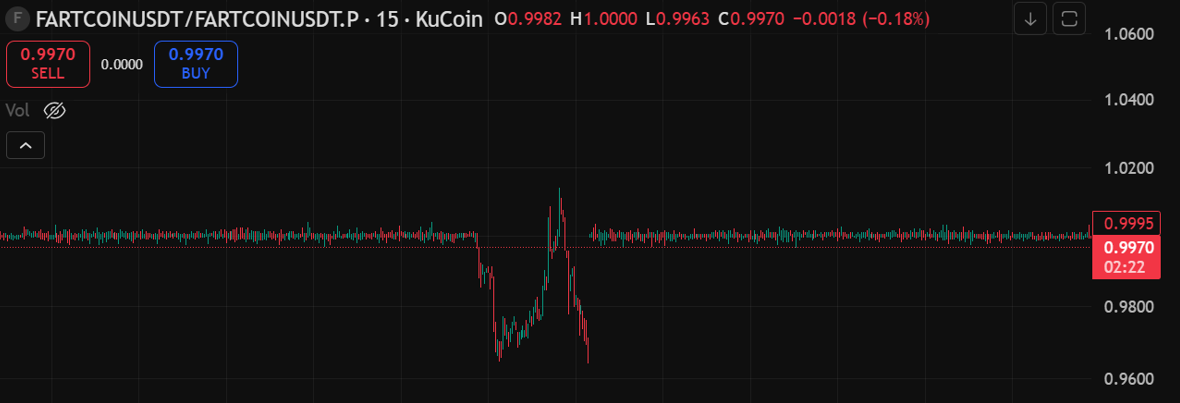
The markets offering the highest funding rate returns are usually also the markets where spot and futures prices show the largest deviations.
The possibility of the futures position being liquidated at a price that the spot market never reaches is not only real, it happens every day.
It is recommended to check the Risky Markets section on DegenWings to understand how large the differences between spot and futures prices can become.
Can We Profit From These Price Deviations?
Absolutely.
In the previous example we looked at a situation where the futures price (where we are short) is higher than the spot price.
In the opposite case, where the spot price is higher than the futures price, a trader using this strategy could immediately be in profit.
DegenWings allows traders to close the position and secure a practically risk-free profit by setting a take profit target.
The Arbitrage section shows the markets where this type of price behavior has occurred in recent days.
Funding Rate Reversal
The final risk, but certainly not the least important, is funding rate reversal.
A market can move from positive funding rates to negative funding rates, and if the trader is not monitoring the situation — which is exactly what we want to avoid with a passive strategy — losses could accumulate without even noticing.
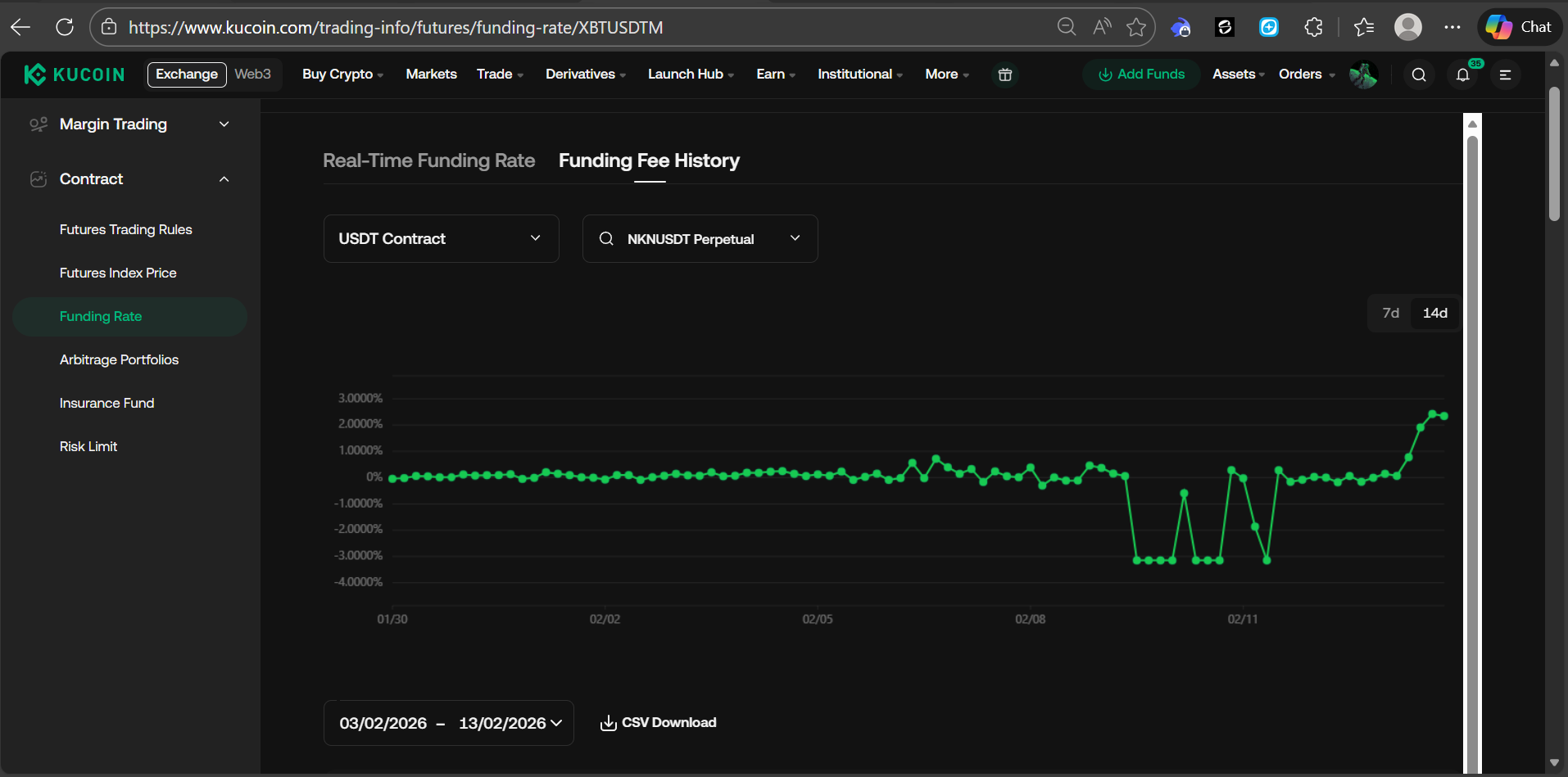
DegenWings can send email alerts when the funding rates of open positions become negative, and it can automatically close the position if funding rates reach a percentage level the trader is not willing to accept.
This means that once the trade is configured, the trader no longer needs to constantly monitor it. DegenWings will either notify the trader or act automatically if necessary.
The same applies to the situations described above.
DegenWings closes positions immediately when delta neutrality is lost, preventing the market from having time to move against the trader.
Regarding price deviations, traders can also configure a stop loss to exit the trade if the spread becomes larger than their accepted tolerance.
Now that you understand the strategy and its risks, let’s look at how DegenWings technically manages them in the next article: “DegenWings - User Manual”